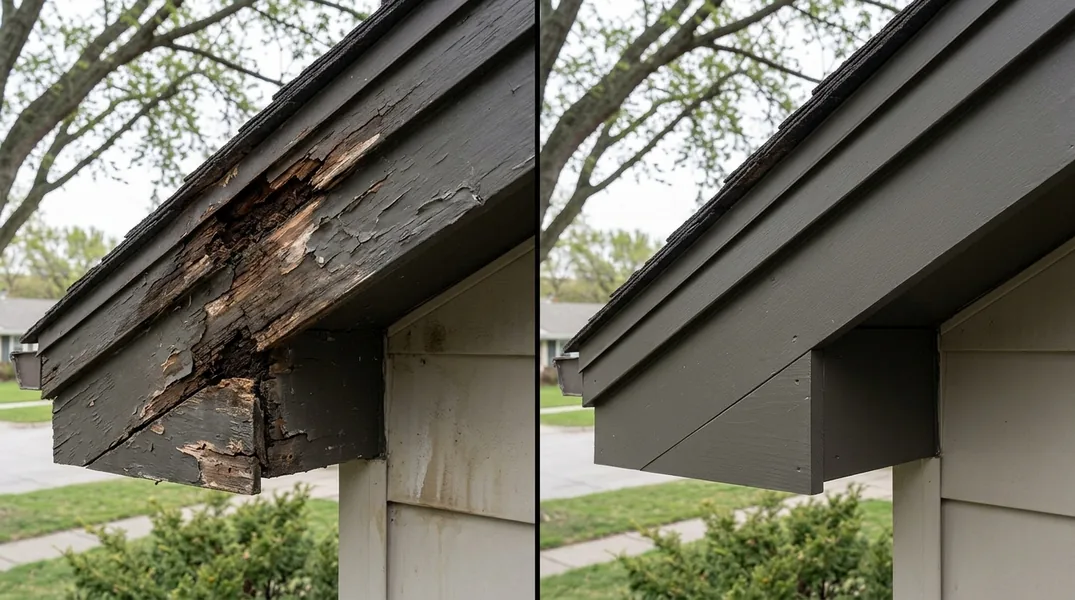
Why Lincoln's Climate Makes Wood Rot Inevitable
If you own a home in Lincoln, you already know that Nebraska winters are no joke. The freeze-thaw cycle that defines our climate is actually one of the most destructive forces working against your home's structural integrity, and it's a primary reason why Wood Rot & Dry Rot Repair is such a common service call for local homeowners.
Here's what happens: water infiltrates small cracks and gaps in your roof, siding, and foundation during fall rains or melting snow. When temperatures drop below freezing, that water expands as it turns to ice, forcing its way deeper into wood framing, trim, and structural members. When it thaws, it leaves behind moisture that wood-eating fungi and bacteria thrive on. Over multiple cycles throughout a single winter season, this repeated expansion and contraction weakens wood fibers, creating soft spots and eventually leading to visible rot. Unlike dry rot, which spreads aggressively, the rot that develops from our climate's moisture patterns can hide inside walls and structural cavities for months before you notice any signs of wood rot.
Ice Dams: The Hidden Culprit Behind Most Roof-Related Rot
Ice dams are perhaps the most underestimated threat to Lincoln homes. An ice dam forms when warm air from your attic melts snow on your roof, but the water refreezes at the cold eaves before it can drain properly. This creates a barrier of ice that traps water, forcing it to back up under your shingles and into your attic and walls. The damage can be catastrophic because the water doesn't just sit on the surface; it soaks into wood rafters, fascia boards, soffit, and the structural members that hold your roof up.
Once water penetrates these areas, it creates a perfect environment for fungal growth. The combination of moisture, darkness, and mild temperatures in an attic or wall cavity allows rot to spread silently for months or even years. By the time you notice water stains on your ceiling or soft spots in your attic, the structural damage may already be extensive. Many homeowners discover ice dam damage only when they're dealing with sagging roofs, cracked ceilings, or when a contractor performing routine maintenance spots the rot. If you've experienced ice dam damage or suspect your roof may have been compromised, it's worth having a professional inspect your attic and upper-story framing to catch rot early.
Recognizing the Signs of Wood Rot Before It Spreads
The challenge with wood rot is that it often advances silently. Unlike a visible crack or a roof leak you can see dripping, rot can be hidden inside walls, under flooring, or deep within structural beams. However, there are several warning signs that should prompt you to investigate further. Soft, spongy wood that feels mushy when you press on it is an obvious red flag. Discoloration, darkening, or a honeycomb-like appearance on wood surfaces also indicates active rot. You might also notice a musty smell in your attic, basement, or crawl space, which is the scent of fungal decay.
Paint that's peeling or bubbling on exterior trim, especially around windows, doors, and roof edges, often indicates that moisture is trapped beneath the surface. Doors or windows that suddenly stick or won't close properly can signal that the framing around them has swollen or warped due to moisture and rot. Foundation cracks that leak, basements that smell damp after rain, and visible mold or mildew growth are also connected to the same moisture problems that create wood rot. If you spot any of these signs of wood rot, the time to act is now. The longer rot goes unaddressed, the more expensive the repairs become, and the greater the risk to your home's safety and value.
Termite Damage in Nebraska: A Secondary Risk You Shouldn't Ignore
While freeze-thaw cycles and moisture are the primary drivers of structural damage in Lincoln, termites add another layer of concern. Nebraska's climate doesn't support the aggressive subterranean termite populations found in warmer states, but that doesn't mean homeowners here are safe. Termites do exist in Nebraska, particularly in older homes with wood-to-soil contact or homes with chronic moisture problems. Moisture-damaged wood is actually more attractive to termites because it's softer and easier for them to tunnel through.
The connection between rot and termites is important to understand: a home with active wood rot is a beacon for termites. They're drawn to the same damp conditions and compromised wood that fungi thrive in. This means that if you have water intrusion and rot, you're also at elevated risk for Termite Damage Repair needs. Termite damage appears as hollow galleries inside wood, often leaving a thin shell of wood on the surface while the interior is completely tunneled out. Unlike rot, which is soft and crumbly, termite damage often feels harder on the surface but is hollow within. If you discover termite activity, professional treatment and structural repair are both essential. The good news is that controlling moisture in your home (which prevents rot) also makes your home less attractive to termites in the first place.
Wood Rot & Dry Rot Repair Near Me: When to Call a Professional
If you've identified potential rot in your home, the question becomes whether to tackle it yourself or hire a professional. For small, surface-level issues like a rotted fence post or a minor section of damaged trim, a handy homeowner might manage repairs. However, when rot involves structural members, it requires professional assessment and repair. This includes rot in floor joists, roof rafters, beams, rim joists, or any wood that bears the weight of your home. Structural rot compromises your home's integrity and can create serious safety hazards if not repaired correctly.
A professional Wood Rot & Dry Rot Repair contractor will not only remove the damaged wood but also identify and address the moisture source causing the problem. If they don't fix the underlying cause, the rot will simply return. This is why it's critical to work with someone who understands both carpentry and moisture management. At Lincoln Carpentry, we inspect the entire affected area, remove all compromised wood, treat the surrounding wood to prevent future fungal growth, and replace damaged sections with new, pressure-treated lumber where appropriate. We also address the moisture source, whether that means improving drainage, repairing gutters, sealing cracks, or improving ventilation. If you suspect structural rot in your home, contact us at (531) 229-0979 or request a free estimate to get a professional assessment.
Wood Rot & Dry Rot Repair Cost in Lincoln: What to Budget
The cost of wood rot repair varies dramatically depending on the extent of damage, the location of the rot, and how long it's been progressing. A small area of surface rot in exterior trim might cost just a few hundred dollars to repair. However, structural repairs involving Floor Joist & Subfloor Repair or Beam Replacement & Load-Bearing Wall Removal can run into the thousands. The reason is that structural repairs often require temporary support systems to hold up the weight of your home while damaged members are removed and replaced. This adds labor and materials costs that surface repairs don't require.
The best way to manage repair costs is to catch rot early. A small area of rot caught and repaired promptly might cost $500 to $1,500. The same rot left untreated for a few years could spread to adjacent framing, doubling or tripling the repair cost. This is why regular inspections of your attic, basement, crawl space, and exterior are so valuable. If you're planning a major renovation or purchase, having a professional inspect for rot is one of the smartest investments you can make. To get a clear picture of what your specific situation will cost, reach out to Lincoln Carpentry for a detailed estimate. Visit our pricing page for general guidance, or call (531) 229-0979 to discuss your project with our team.
Looking for a professional carpentry contractor in Lincoln? Lincoln Carpentry responds fast for all your carpentry needs.
Get a Free QuoteOur services: Wood Rot & Dry Rot Repair · Termite Damage Repair · Floor Joist & Subfloor Repair