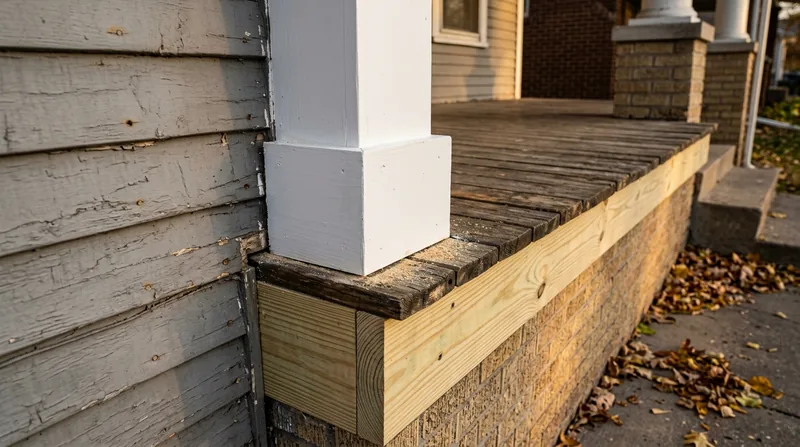




Wood rot and dry rot repair in Lincoln is a critical maintenance issue for the city's historic foursquares, Victorian porches, and brick bungalows that line the elm-shaded streets of the Near South and Country Club neighborhoods. Lincoln's continental climate, with freeze-thaw winters, heavy wet snow, ice dams, and humid summers, creates ideal conditions for wood decay in sill plates, rim joists, porch floors, fascia, and window trim where meltwater sits and soaks. The loess and clay soil beneath most Lincoln basements holds moisture year-round, and the Salt Creek and Antelope Creek bottoms keep crawlspaces and low basements damp, accelerating rot in subfloor framing and band boards. We cut out decayed wood, treat the surrounding framing to arrest moisture and fungal growth, and rebuild with rot-resistant lumber. This is a permanent repair, not a cosmetic patch or temporary seal. Call (531) 229-0979 for a free estimate, or read on to understand what rot looks like, how it spreads, and what the work costs.
Why Wood Rot Matters in Lincoln: Climate and Construction
Lincoln's residential stock was built for durability, but not against the specific stresses of 140 years of freeze-thaw cycles and damp basements. Every full basement in the city sits on swelling and shrinking loess clay, which cracks foundations, settles center beams, and bounces joists. Moisture wicks up through rim joists and sill plates. Meltwater pools on porch decks and ledgers in spring. Humidity swings between dry winter heat inside and wet summer air outside cause wood to expand and contract, opening grain and checking that trap water. Rot starts quietly in these zones, and by the time soft spots show through paint or a floor feels spongy underfoot, the decay runs deep into framing that carries load.
- Wood rot weakens structural members like floor joists and rim joists, allowing floors to sag and bounce over time.
- Dry rot fungus spreads through framing in damp, poorly ventilated spaces, traveling along grain and across members faster than wet rot.
- Untreated rot in porch columns and ledgers can lead to dangerous movement, settling, or failure under load.
- Sill plates and band boards that rot allow water intrusion and pest entry, opening the door to termite damage and further decay.
- Window sills and exterior trim that rot compromise weathertightness and allow water into walls and rim joists.
Early detection and repair preserve the structural integrity of your home and prevent far costlier replacements later.
Key info: Lincoln's freeze-thaw winters and damp basements make porch floors, column bases, and rim joists the hot spots for decay. A soft spot the size of a quarter in a sill plate can signal rot that extends 12 to 18 inches into the framing. Don't wait for visible collapse; call us at (531) 229-0979 for an inspection.
For more detail on related structural issues, see our guide to floor joist and subfloor repair in Lincoln.
How We Repair Wood Rot and Dry Rot in Lincoln
Our process starts with a careful inspection to map the extent of decay and identify the moisture source. We remove all visibly soft or discolored wood, cut back to solid grain, and expose the surrounding framing to assess how far the rot has traveled. We then treat exposed wood with a fungicide to arrest spore activity and prevent reinfection. Finally, we rebuild the decayed section with pressure-treated lumber, redwood, or Douglas fir, depending on the location and exposure, and seal all new wood to shed water. The repair is structural, not cosmetic, and designed to last as long as the original framing.
- We expose the decay by cutting out soft wood and loose grain until we reach solid, undamaged framing on all sides.
- We treat the surrounding wood with a moisture-control fungicide to stop spore germination and slow reinfection.
- We rebuild the section with rot-resistant lumber, sistering new joists to existing members if the decay is partial, or replacing the full member if decay is deep.
- We seal all new wood and repair the moisture source, whether that means flashing, grading, ventilation, or gutter work.
- We finish the repair to match the existing framing and ensure proper bearing and fastening to carry load safely.
The timeline depends on access and the size of the repair, but most single-member replacements take one to two days.
Example: A homeowner in Havelock noticed soft spots in the porch floor where the ledger board met the house. We removed the decayed ledger, treated the rim joist and band board with fungicide, sistered a new pressure-treated ledger to the house, and installed new flashing and gutter work to shed water away from the framing. The repair cost $1,400 and took one day. Without the repair, the porch would have sagged within two to three seasons.
For structural concerns that involve load-bearing walls or major joist replacement, see our page on beam replacement and load-bearing wall removal.
| Approach | Description | Best for |
|---|---|---|
| Localized removal and rebuild | Cut out decayed wood, treat surrounding framing, and install new pressure-treated or rot-resistant lumber in the damaged section. | Rot confined to one area, such as a porch ledger, sill plate, or window sill, where the member is otherwise sound. |
| Sistering | Install a new joist or beam alongside the decayed member, fastened with bolts or screws, to share the load and stabilize the framing. | Partial decay in a floor joist or rim joist where replacement would be difficult or costly, and the new member can be fully supported. |
| Full member replacement | Remove the entire decayed member, install temporary support if needed, and install a new member of the same species and dimension. | Rot extends the full length or depth of a structural member, or decay has compromised bearing and fastening points. |
| Moisture control and prevention | Install or repair flashing, grading, gutters, downspouts, crawlspace vents, and sump pumps to prevent water from pooling on framing. | All repairs, especially in damp basements, porch decks, and exterior trim zones, to prevent reinfection and future decay. |
Wood Rot and Dry Rot Repair Cost in Lincoln: What to Expect
The cost of wood rot repair in Lincoln starts at around $650 for a small, localized repair, such as a window sill or a short section of fascia trim. Most porch ledger and rim joist repairs range from $1,200 to $2,500, depending on the length of the member, the depth of decay, and the extent of moisture control work needed. Full joist replacement or sistering multiple members can run $3,000 to $6,000 or more, especially if temporary support or special access is required. The key factors that affect cost are the size of the decayed area, the depth of rot into the member, whether the repair is structural or cosmetic, the lumber species and rot-resistance required, and the difficulty of access and moisture source correction.
We always recommend getting two or three estimates from local carpenters before committing to a repair. This helps you understand the scope and the reasoning behind the cost, and it ensures you're not paying for unnecessary replacement when repair is the honest answer. See our full pricing page for more detail on how we break down costs by repair type and scope.
Insurance may cover wood rot repair if the decay was caused by a covered peril, such as a roof leak or burst pipe, rather than deferred maintenance or poor drainage. We can help you document the damage and the repair plan for your insurance company, but we cannot guarantee approval or coverage. Contact your agent to understand your policy limits and deductible before requesting an estimate from us.
Wood Rot and Dry Rot Repair Near Me: What to Look for When Hiring a Carpenter in Lincoln
Hiring a local carpenter for wood rot repair is a straightforward process if you know what questions to ask. Start by verifying that the contractor is fully insured and can provide proof of coverage. Request references from recent jobs in Lincoln or nearby areas, and call at least two to ask about the quality of the work, the professionalism of the crew, and whether the repair has held up over time. Get written estimates from two or three contractors that break down the scope, the lumber type and cost, labor, and any moisture control work. Ask whether a permit is required for your specific repair, and if so, confirm that the contractor will handle the permit application and inspections with your local building department. If your home is in a historic district or subject to HOA rules, verify that the repair method and materials comply with local guidelines before work begins.
- Confirm the contractor is fully insured with general liability and workers' compensation coverage available for inspection.
- Call references and ask whether the repair has stayed sound, whether the contractor was on time and professional, and whether they explained the work clearly.
- Get at least two written estimates that itemize labor, materials, and any moisture control or framing support work.
- Ask whether the repair requires a permit from the City of Lincoln building department, and confirm the contractor will handle permitting and inspections.
- If your home is in a historic district or subject to HOA design review, verify that materials and methods comply before signing a contract.
A good carpenter will take time to explain what the rot is, why it happened, and how the repair will prevent it from returning. They will not pressure you to replace wood that can be repaired, and they will not hide costs or skip moisture control work. Contact us at (531) 229-0979 for a free, no-obligation estimate and a straightforward conversation about your repair options.
Wood Rot & Dry Rot Repair in Lincoln: Pricing Guide
| Service | Price | Details |
|---|---|---|
| Small localized repair (sill, trim, fascia) | Starting at $650 | Removal, treatment, and rebuild of a small decayed section up to 2 linear feet in non-structural trim or exterior wood. |
| Porch ledger or rim joist repair | Starting at $1,200 | Removal of decayed ledger or rim joist section, fungicide treatment, new pressure-treated lumber installation, and flashing work. |
| Full floor joist replacement or sistering | $2,500 to $6,000 | Complete removal and replacement of a decayed joist or installation of a sistered member, including temporary support and bearing work. |
| Multiple members or complex structural repair | On estimate | Repairs involving multiple joists, beams, or load-bearing members require on-site inspection to assess depth, access, and support requirements. |
| Travel | Included | No separate mileage or travel fee for jobs in Lincoln and surrounding service areas within 30 miles of the city. |
| Free estimate | No charge | Response within 24 hours at (531) 229-0979 with no obligation to book; written estimate provided after inspection. |
Indicative pricing, the exact cost depends on square footage, finish, and site access. Free personalized estimate within 24h at (531) 229-0979.


