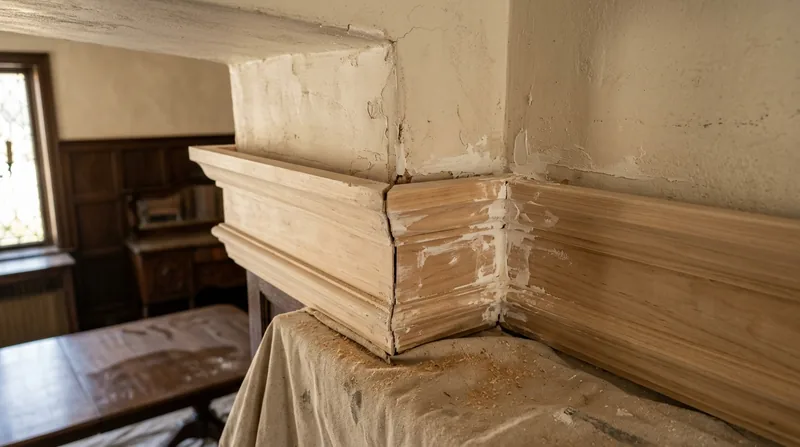




Lincoln's residential architecture spans a century and a half, from Queen Anne and Tudor Revival homes on the elm-lined blocks of the Near South to postwar brick ranches and split-levels spreading across Eastridge and Piedmont. Nearly every house moves seasonally as the heavy loess and clay soil beneath swells and shrinks, and the freeze-thaw cycles of our hard continental climate stress every joint and seam. Crown molding and baseboard installation in Lincoln demands the precision of coped joints, clean caulk lines, and period-correct profiles that respect the character of a 1920s Colonial Revival home or the clean geometry of a modern interior. We install crown molding, baseboards, chair rail and window trim to match what exists or to define a crisp new standard, and we work from the same crew every time so the work carries real craft.
Why Trim Quality Matters in Lincoln's Shifting Homes
Lincoln homes sit on full basements in soil that moves up and down with the seasons. Door frames rack, walls settle unevenly, and trim joints that were tight in January open by July. Baseboards and crown molding installed with rigid caulk and butt joints will crack and gap as the house breathes. Coped joints, where one piece of molding is scribed to fit the profile of another, absorb that movement and stay tight. The same principle applies to window casing and door jambs, which must be shimmed and leveled to the actual opening, not to a plumb line that assumes the wall is true.
- Coped joints allow molding to flex slightly without showing gaps as the house settles and the humidity cycle shifts the wood.
- Quality caulk and paint work hide minor movement and keep dust and air infiltration out of the room.
- Period-correct profiles on Near South and Country Club homes preserve the original character and maintain resale value.
- Modern crisp trim on newer homes in Meadowlane or subdivisions south of town sets a clean, finished look that lasts.
Getting trim right the first time means fewer callbacks and a home interior that stays tight and finished-looking through the seasonal swings Lincoln weather demands.
Key info: A Tudor Revival home in the Country Club area with original crown molding may have profiles no longer stocked at big-box retailers. We match existing trim by eye and source materials from specialty mills, or we design new trim that complements the home's era and sits clean against plaster or drywall that has settled and is no longer perfectly plumb.
For more detail on how we handle homes with structural movement, see our finish and trim carpentry page.
How We Install Crown Molding and Baseboards in Lincoln Homes
Every trim job starts with understanding the room. We check for plumb and level, identify where the house has settled or shifted, and measure the actual angles at corners rather than assuming they are 90 degrees. Most Lincoln homes built before 1970 have corners that are slightly out of square, and newer homes sometimes have walls that are not perfectly plumb due to foundation movement or framing tolerances. We work from these realities, not against them.
- We inspect the room and check corners, walls and ceilings for plumb, level and square using hand tools and a laser level.
- We plan the layout so seams fall in the least visible spots, usually at doorways or the far end of a room from the entry.
- We cut coped joints at inside corners so the molding profile sits tight and flexes with the house as it moves.
- We nail or screw molding to studs and blocking behind drywall, not just to the drywall itself, so fasteners hold through seasonal wood movement.
- We caulk all joints and nail holes with paintable caulk, sand lightly, and prep for paint so the trim is ready to finish or ready for your painter.
The result is trim that sits tight, joints that stay closed, and a finished interior that looks like it was built correctly from the start.
Example: A 1960s split-level in Eastridge had baseboards that had pulled away from the wall in several rooms as the house settled. Rather than simply re-nail the existing base, we removed it carefully, checked the wall for plumb, shimmed out any high spots, and reinstalled with a fresh caulk line. The baseboards now sit flush and tight, and the caulk will flex as the house continues to move through the seasons.
Learn more about our framing and structural carpentry approach to understanding how houses move.
Installation Methods and Materials for Crown Molding and Baseboards
| Approach | Description | Best for |
|---|---|---|
| Coped joints at inside corners | One molding piece is scribed to fit the profile of the other, allowing slight movement and keeping the joint tight through seasonal humidity and temperature swings. | All interior corners, especially in older homes where walls are not perfectly square. |
| Mitered outside corners | Two pieces cut at 45 degrees and fitted together to create a clean corner. Requires precise cutting and a backing block or glue to hold the joint stable. | Outside corners on built-ins, columns, or modern trim where symmetry is the design goal. |
| Butt joints with caulk | Molding is cut square and fitted end-to-end, then caulked and painted. Simpler to execute but relies on caulk to hide gaps that open as the house moves. | Shorter runs, areas where the wall is reliably plumb and square, or modern homes with stable framing. |
| Custom profile matching | Existing molding is sampled, measured and sourced from specialty mills, or new profile is milled to match the home's era and adjacent rooms. | Tudor Revival, Colonial Revival and period homes on Near South and Country Club where original trim is visible and must be matched. |
| Blocking and fastening | Molding is nailed or screwed to solid wood blocking behind drywall, not into drywall alone, so fasteners remain tight and do not pull through as the house moves. | All installations in homes with seasonal settlement or soil movement, which describes nearly every house in Lincoln. |
Crown Molding and Baseboard Installation Cost in Lincoln: What to Expect
Crown molding and baseboard installation in Lincoln typically starts at $450 for a single room, but the actual cost depends on the room size, corner complexity, whether existing trim must be removed, and the profile and material you choose. A 12 by 14 foot bedroom with four corners and one doorway costs less than a large great room with multiple corners, built-in shelving, and a fireplace opening. Custom profile matching on a Tudor home costs more than installing off-the-shelf pine molding on a newer ranch. Wood species matters too: pine and poplar are less expensive than oak or maple, and specialty materials sourced from mills add time and material cost.
Several factors move the price up from the starting point. If existing trim must be removed and disposed of, add labor. If walls are significantly out of plumb or corners are not square, scribing and shimming take more time. If you want paint-grade work with caulk and finish-sanding, that is included in the labor estimate. If you want stain-grade trim with no caulk and tight miter joints, precision increases the cost. Ceiling height also matters: a 10-foot ceiling is faster to trim than a 12-foot or cathedral ceiling that requires scaffolding or extension ladders.
The best way to know what your job costs is to get two or three estimates on site. We charge nothing for an estimate and respond within 24 hours. Call us at (531) 229-0979 or visit our pricing page for more detail on how we structure estimates and what to expect from a site visit.
Crown Molding and Baseboard Installation Near Me: What to Look for When Hiring a Carpenter in Lincoln
When you are ready to hire someone for trim work, start by checking that they are fully insured and can show you a certificate of insurance. Ask for references from recent jobs in Lincoln or the surrounding area, and call at least two to ask about the quality of the work and whether the crew cleaned up after themselves. Get written estimates from at least two contractors so you can compare scope, materials, and timeline. Ask whether the estimate includes removal of old trim, caulking and prep for paint, or whether those are add-ons. Understand what happens if a wall is more out of plumb than expected or if hidden rot is found during removal of old trim.
For trim work, you do not typically need a permit unless the molding is part of a larger renovation that triggers a building permit. However, if your home is in a historic district or a neighborhood with an HOA, check the rules before you commit to a new trim profile or finish. Some HOAs require approval for exterior changes, and some historic districts have guidelines for visible trim. Ask your contractor whether they are familiar with your neighborhood and any local rules that might apply.
If you have questions about your specific situation, contact us for a free estimate and we will walk you through what the job entails and what it will cost.
Crown Molding & Baseboard Installation in Lincoln: Pricing Guide
| Service | Price | Details |
|---|---|---|
| Single room, standard profile | Starting at $450 | Includes crown molding or baseboard installation, coped inside corners, caulking, and paint prep for a typical bedroom or small room |
| Large room or multiple rooms | Starting at $800 | Crown molding and baseboard for great rooms, dining rooms, or multiple connected spaces with complex corners and door openings |
| Custom profile matching or specialty materials | Starting at $600 | Sourcing and installing trim that matches existing period molding or using oak, maple, or specialty wood instead of standard pine |
| Removal of existing trim and disposal | From $150 to $400 | Varies by room size and whether old trim is salvageable; included in estimate when quoted with new installation |
| Travel and estimate | Free estimate, no mileage fee | We cover travel within Lincoln and surrounding service areas; response within 24 hours at (531) 229-0979 |
Indicative pricing, the exact cost depends on square footage, finish, and site access. Free personalized estimate within 24h at (531) 229-0979.


