Why Sticking Doors Are Common in Lincoln Homes
If you live in Lincoln and your doors won't close properly, you're not alone. Sticking doors are one of the most common complaints homeowners make, and there's a very good reason why our region experiences this problem so frequently. The answer lies beneath your feet: Nebraska's expansive clay soil.
Lincoln sits in an area with heavy clay-based soil that expands and contracts dramatically with moisture changes. When it rains or snow melts, this clay absorbs water and swells. During dry seasons, it shrinks. This constant movement puts pressure on your home's foundation, causing it to shift slightly. Unlike dramatic foundation cracks that get immediate attention, these smaller movements often go unnoticed until you start noticing that your door won't close properly or requires a hard push to open.
The problem isn't just the soil itself, either. The way your home was built, the depth of your foundation, and how well your property drains all play a role. Many older homes in Lincoln were built before modern foundation standards became common, making them even more susceptible to these shifts. The result is a home that settles unevenly, throwing door frames out of square and creating the frustrating bind that makes every entry feel like a wrestling match.
House Settling and Foundation Movement: The Root Cause
When people ask why their doors are sticking in summer or why doors stick in their house year-round, the answer often points to foundation movement. Your home's foundation is not as stable as you might think. All houses settle over time, but the rate and direction of that settling depends on soil conditions, drainage, and how evenly weight is distributed across the structure.
In Nebraska's climate, seasonal changes accelerate this process. Winter freezing and thawing cycles, spring runoff, and summer heat all stress your foundation differently. The clay soil expands upward during wet periods, pushing on your foundation walls and slab. As it dries out, it pulls away, creating voids. This repetitive movement causes your home's frame to shift, even if just by a fraction of an inch. That tiny shift is enough to throw a door frame out of plumb, making the door bind against the frame when you try to close it.
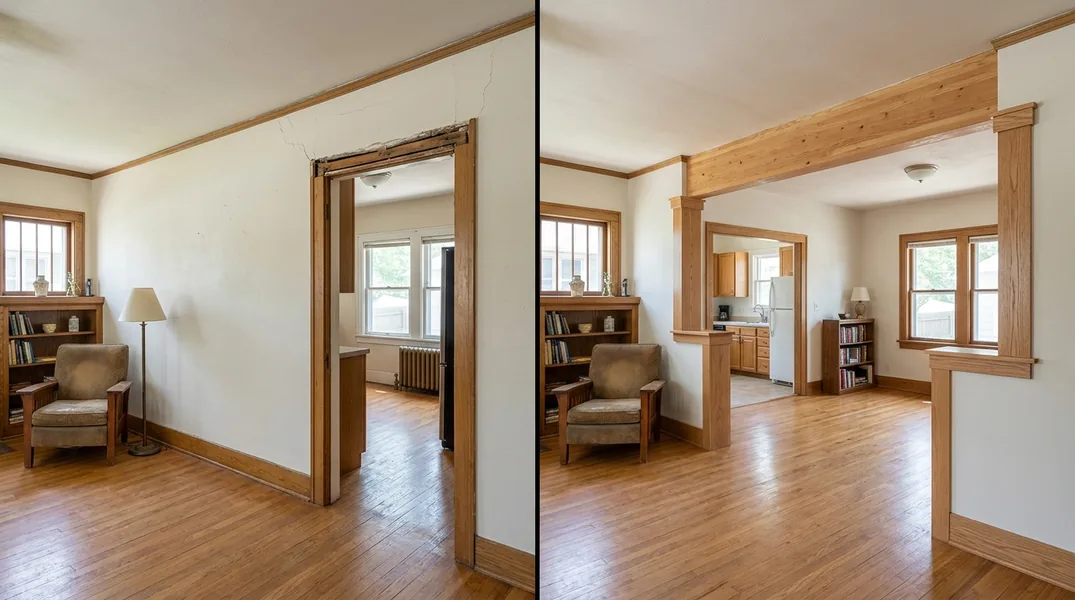
The most telling sign of foundation movement is when your door sticking in summer gets worse or when you notice the problem develops suddenly. This usually means the soil beneath your home is actively moving. If you also see cracks forming in drywall, gaps between walls and trim, or doors and windows that are harder to operate in certain seasons, foundation settling is very likely the culprit. These issues often indicate that deeper structural problems may be developing, and that's when it's time to call in a professional to assess whether Beam Replacement & Load-Bearing Wall Removal or other structural repairs might be necessary.
Humidity Swings and Wood Expansion: Why Summer Makes It Worse
Even if your foundation is stable, humidity plays a major role in why doors stick in summer. Wood is hygroscopic, meaning it absorbs and releases moisture based on the air around it. When humidity levels rise, wood swells. When they drop, it shrinks. In Lincoln, summer humidity can swing wildly, especially during our hot, muggy afternoons followed by cooler, drier evenings.
Your door frame is typically made of wood, and so is your door itself. When summer humidity spikes, both absorb moisture and expand. If your door frame has already shifted slightly due to foundation movement, this additional swelling can push the door tightly against the frame, creating a bind. The door may work fine on a dry day but become impossible to close when humidity climbs. This is why you might experience door sticking in summer more acutely than in winter, even though the underlying foundation issue persists year-round.
The wood in your door and frame also responds to temperature changes. Hot summer days cause wood to expand slightly, while cool mornings cause it to contract. This constant micro-movement, combined with seasonal humidity changes, can gradually work a door out of square. Over months and years, this repeated stress can actually cause the wood itself to warp, especially if the door or frame was not properly sealed or maintained. If the wood has already begun to rot or deteriorate, the problem becomes even worse. In severe cases, Wood Rot & Dry Rot Repair may be necessary to restore the structural integrity of the frame.
When to Call a Professional for Sticking Doors
Not every sticking door requires professional intervention. If your door binds only occasionally or if the problem is minor, you might try simple fixes like adjusting the hinges, planing down the edge of the door, or improving ventilation to control humidity. However, there are clear warning signs that indicate you need professional help to diagnose and fix the underlying problem.
If your door won't close properly consistently, if the problem has worsened over time, or if you notice multiple doors sticking throughout your home, the issue is likely structural. This is especially true if you also see other signs of foundation movement like cracked drywall, sloping floors, or gaps between trim and walls. In these cases, a qualified carpenter can inspect your home, identify whether foundation settling is the cause, and recommend the appropriate solution. Sometimes the fix is as simple as shimming the door frame back into square. Other times, it requires addressing the underlying foundation issue, which might involve drainage improvements, foundation repair, or in rare cases, structural reinforcement.
The professionals at Lincoln Carpentry have years of experience diagnosing why doors stick in Lincoln homes. We understand the unique challenges posed by our clay soil and climate, and we know how to identify whether your sticking door is a simple adjustment or a symptom of a more serious problem. If you're concerned about your doors or have noticed other signs of foundation movement, we recommend getting a free estimate from a professional. Call us at (531) 229-0979 to schedule an inspection.
Simple Fixes You Can Try at Home
Before calling a professional, there are a few simple troubleshooting steps you can take to see if your sticking door problem is minor. Start by checking the hinges. Over time, hinge screws can loosen, allowing the door to sag slightly and bind against the frame. Tighten all hinge screws with a screwdriver, checking after each one to see if the door closes more smoothly. If the door still sticks, try adjusting the hinges themselves. Most interior door hinges have a small adjustment screw that allows you to shift the door slightly in or out. A quarter-turn adjustment might be all you need.
Next, check the door frame for obvious damage or warping. Run your hand along the frame to feel for high spots or areas where the wood has swollen. If you find a spot where the door is catching, you might be able to carefully sand or plane down that area. Use fine-grit sandpaper and work slowly, testing the door's operation frequently. This approach works best for minor catches and should only be attempted if you're comfortable with basic woodworking tools.
Finally, consider your home's humidity levels. If you're running an air conditioner in summer, make sure your home is properly sealed and that your AC unit is maintaining consistent humidity. Conversely, if your home is too dry in winter, a humidifier can help. Keeping humidity levels between 30 and 50 percent year-round can significantly reduce wood expansion and contraction issues. However, if these simple fixes don't resolve the problem or if you suspect foundation settling is involved, professional diagnosis is the safer choice.
What to Expect During a Professional Inspection
When you call Lincoln Carpentry for help with a sticking door, our first step is always a thorough inspection. We'll examine the door and frame, check for signs of foundation movement, and assess the overall condition of your home's structure. We look for telltale signs like uneven gaps between the door and frame, cracks in the surrounding drywall or plaster, and evidence of wood rot or moisture damage. We'll also ask you questions about when the problem started, whether it's gotten worse, and if you've noticed other issues like sloping floors or sticking windows.
If foundation settling appears to be the cause, we may recommend additional assessment, such as checking your home's exterior for drainage problems or looking at the basement or crawl space for signs of moisture intrusion. In some cases, the solution might involve improving drainage around your foundation, sealing cracks, or addressing moisture issues. If structural damage has occurred, we can discuss options like Floor Joist & Subfloor Repair or other corrective measures. The goal is always to identify the root cause and provide a lasting solution, not just a temporary fix.
Our team will provide you with a detailed explanation of what we found and what options are available to you. We're transparent about pricing and always discuss the scope of work before beginning any repairs. If you'd like to move forward, we can often schedule the work quickly and minimize disruption to your home. For a free estimate, reach out to us at (531) 229-0979 or visit our website.
Looking for a professional carpentry contractor in Lincoln? Lincoln Carpentry responds fast for all your carpentry needs.
Get a Free QuoteOur services: Wood Rot & Dry Rot Repair · Termite Damage Repair · Floor Joist & Subfloor Repair