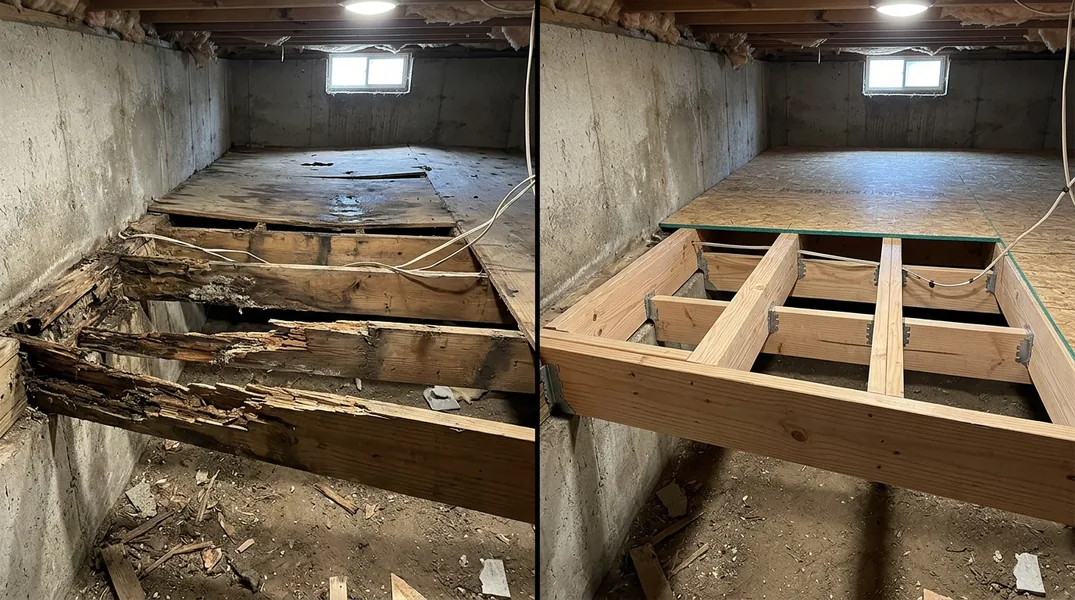
Why Old Lincoln Homes Develop Sagging Floors
If you own an older home in Lincoln, you may have noticed that your floors aren't quite as level as they used to be. That subtle dip or bounce underfoot isn't just an annoyance, it's often a sign that something structural needs attention. Sagging floors are one of the most common issues we see in homes built before the 1980s, and understanding why they happen is the first step toward fixing them.
The culprit in many Lincoln homes is the clay soil that sits beneath the foundation. This type of soil is incredibly common across Nebraska, and it has a major weakness: it compresses and shifts over time, especially when exposed to moisture changes. During wet springs and after heavy rains, clay soil expands. During dry summers, it contracts. Over decades, this constant movement causes foundation settling, which puts uneven stress on the wooden support beams and floor joists above. When those beams start to weaken or rot, the entire floor system loses its support, and you get that telltale sag.
The Role of Basement Beams in Floor Support
Your basement beams are the backbone of your home's structural integrity. These large wooden (or sometimes steel) members run perpendicular to your floor joists and transfer the weight of everything above them down to the foundation walls and posts. In older homes, these beams were often installed decades ago when building codes were less stringent, and wood quality and treatment standards were different from today.
Over time, basement beams can fail for several reasons. The most common culprit is Wood Rot & Dry Rot Repair, which occurs when moisture penetrates the wood and fungal growth eats away at the structural fibers. Poor drainage around the foundation, plumbing leaks, and high humidity in basements all contribute to this decay. When a beam loses even 20 to 30 percent of its structural capacity, the floor above begins to sag noticeably. You might also see cracks in basement walls or notice that doors and windows upstairs no longer close properly, both signs that your beam system is failing.
How to Identify Sagging Floors in Your Home
Recognizing sagging floors early can save you thousands in repair costs. The most obvious sign is a visible dip in the floor when you look across the room, especially noticeable in older homes where hardwood or tile is installed. You might feel it too, particularly when walking across a room or rolling a chair, as gravity pulls things toward the center of the sag. Some homeowners describe it as a subtle 'bowling alley' effect.
Other warning signs include cracked plaster or drywall, especially where walls meet the ceiling, doors and windows that stick or won't close properly, and visible separation between trim and walls. In the basement, look for cracks in the support beams themselves, discolored or soft wood, a musty smell (indicating moisture and decay), and visible gaps between the beam and the posts or walls it rests on. If you notice any of these issues, it's time to have a professional inspect your home. The longer you wait, the more structural damage can occur, and the more expensive the repair becomes.
Sagging Floor Repair Options: Sistering Floor Joists and Beyond
When it comes to fixing sagging floors, there are several proven approaches, and the right one depends on the severity of the problem and the underlying cause. One of the most effective solutions is sistering floor joists, a technique where new wooden members are bolted alongside existing damaged or undersized joists to restore strength and level. This method is ideal when the existing joists are still sound but have lost some capacity, or when they were simply undersized for modern loads.
Floor Joist & Subfloor Repair can also involve replacing the subfloor itself if rot or water damage has compromised those boards. In cases where the basement beam is the primary problem, Beam Replacement & Load-Bearing Wall Removal may be necessary. This is a more involved process that requires temporary support posts and careful engineering, but it's the only real solution when a beam has suffered significant decay or structural failure.
Another option is installing adjustable posts or additional support columns in the basement to lift and level the floor gradually over time. This approach works well when the sag is not severe and the homeowner wants to avoid the expense of full beam replacement. However, it requires ongoing monitoring and adjustment. In all cases, addressing the moisture problem that caused the damage in the first place is essential. Without fixing drainage, ventilation, or moisture intrusion, even a brand new beam will eventually fail.
Sagging Floor Repair Cost in Lincoln: What to Budget
The pricing for sagging floor repair varies widely depending on the scope of work. A simple sistering project on a few joists might run between $1,500 and $4,000, while full beam replacement can easily exceed $8,000 to $15,000 or more. Factors that influence cost include the size of the affected area, the severity of rot or damage, whether temporary support is needed during repairs, and the accessibility of the problem area.
Homes with extensive rot, multiple failed beams, or foundation issues will naturally cost more to repair than those with a single compromised joist or a beam that's still structurally sound but sagging. It's also important to factor in any additional work needed to address moisture problems, such as improving basement drainage, installing vapor barriers, or repairing plumbing leaks. Many homeowners are surprised to learn that the actual repair is sometimes cheaper than the preparatory work needed to ensure the problem doesn't return.
The best way to understand what your specific situation will cost is to schedule a free estimate with Lincoln Carpentry. Our team will inspect your home thoroughly, identify the root causes of the sag, and provide a detailed quote that breaks down labor, materials, and any necessary additional work. Call us at (531) 229-0979 to arrange your inspection.
When to Call a Professional for Sagging Floor Repair Near Me
While some minor home repairs can be DIY projects, sagging floors are not one of them. This is structural work that requires professional knowledge, specialized tools, and often building permits. Mistakes in floor joist repair or beam replacement can compromise your home's safety and create liability issues. Additionally, most insurance policies won't cover damage that results from unprofessional repairs.
A qualified carpenter or structural specialist will know how to properly assess the damage, design a repair that meets local building codes, and execute it safely. They'll also identify secondary issues you might miss, such as hidden rot in adjacent framing or moisture problems that need to be addressed. If you're noticing any signs of sagging in your Lincoln home, don't wait and hope the problem resolves itself. Contact Lincoln Carpentry today at (531) 229-0979 for a professional evaluation and free estimate. The sooner you address the issue, the simpler and more affordable the fix will be.
Looking for a professional carpentry contractor in Lincoln? Lincoln Carpentry responds fast for all your carpentry needs.
Get a Free QuoteOur services: Wood Rot & Dry Rot Repair · Termite Damage Repair · Floor Joist & Subfloor Repair